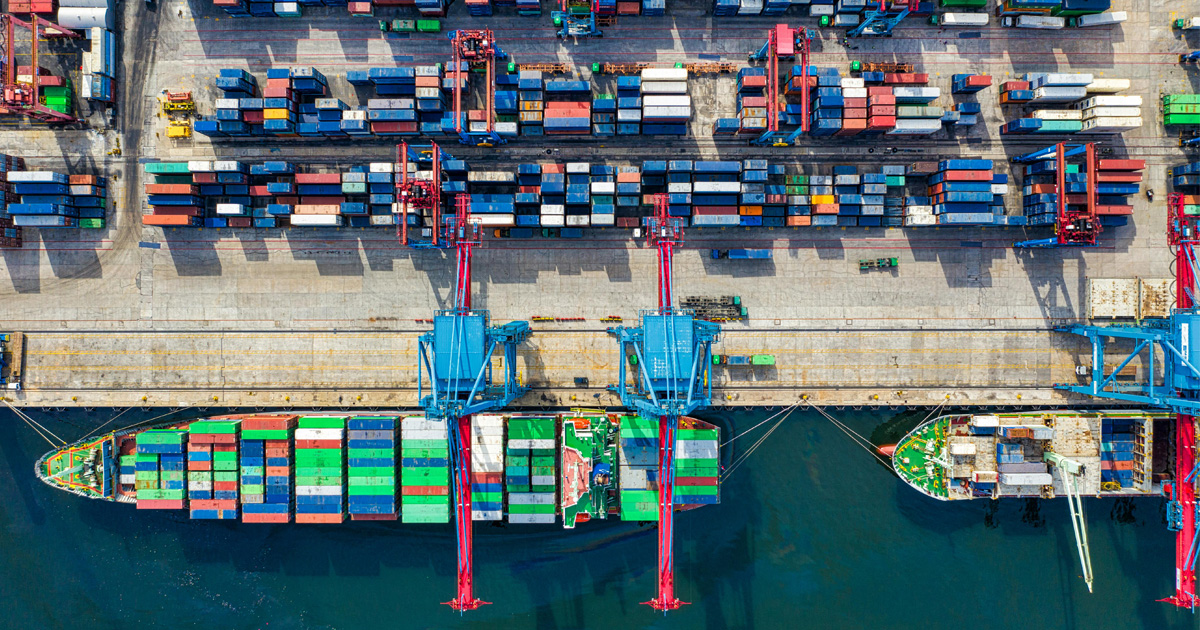
When governments raise tariffs, the stated objective is usually economic: to protect domestic industries, rebalance trade or exert geopolitical pressure. Yet tariffs also carry a quieter and less examined consequence. By distorting prices and redirecting global supply chains, they create fertile ground for trade-based money laundering — the practice of moving illicit value through seemingly legitimate trade.
Trade-based money laundering, or TBML, has long been regarded by regulators as one of the most difficult forms of financial crime to detect. Unlike conventional money laundering, which typically involves suspicious transfers of cash or financial assets, TBML hides value within invoices, shipping documents and complex cross-border supply chains. When tariffs rise, the incentives to manipulate these channels intensify.
At the heart of the issue lies price distortion. Tariffs raise the landed cost of imported goods, sometimes dramatically. A 25 per cent duty on electronics, steel or consumer products can transform the economics of a transaction overnight. Where such differentials exist, so too does the incentive to conceal the true value of goods. Importers may understate the declared value of shipments to reduce the duties payable, while exporters may inflate invoices to shift capital across borders. The gap between the real and declared value becomes a vehicle for moving funds.
These practices are not new, but higher tariffs make them more attractive. A shipment valued at $1mn that attracts a quarter of its value in duties presents a powerful temptation to manipulate documentation. Even modest adjustments to declared value can yield significant savings, particularly for high-volume traders operating on thin margins. What begins as tariff evasion can quickly resemble the mechanics of money laundering, as side payments, offshore transfers and informal settlement channels are used to reconcile discrepancies.
The manipulation of invoices and trade documentation is often accompanied by more elaborate restructuring of supply chains. As tariffs increase, companies frequently reroute goods through intermediary jurisdictions where duties are lower or enforcement is less stringent. Goods manufactured in one country may be shipped to another for minimal processing or simple relabelling before being re-exported with a new country of origin. Such transshipment practices blur the true source and destination of goods and introduce layers of intermediaries into the transaction chain.
From a financial crime perspective, this proliferation of intermediaries creates opacity. Newly formed trading companies with limited operational footprints appear in jurisdictions that have suddenly become key nodes in global supply chains. Payments pass through multiple accounts across different countries before settling with the ultimate beneficiary. The complexity of these arrangements mirrors classic laundering techniques designed to obscure beneficial ownership and the movement of value.
Higher tariffs also tend to coincide with broader economic and geopolitical tensions. Trade restrictions are frequently accompanied by export controls, technology bans or targeted sanctions. In such an environment, the incentives to disguise the end use, origin or destination of goods multiply. Companies seeking to access restricted markets or technologies may resort to indirect routing through third parties, false declarations or mislabelled shipments. These activities sit at the intersection of tariff evasion, sanctions circumvention and trade-based money laundering, presenting a compounded risk for financial institutions.
For global trade and financial hubs, the implications are particularly acute. Singapore, Hong Kong and Dubai often serve as neutral conduits in times of trade tension, hosting regional headquarters, financing structures and trading intermediaries for multinational companies. When tariffs disrupt direct trade between major economies, activity frequently shifts into these centres. The volume of cross-border payments rises, as does the complexity of trade documentation and settlement arrangements. Financial institutions operating in such jurisdictions may find themselves processing transactions linked to multi-layered trade routes and newly established counterparties whose commercial rationale is difficult to assess.
The pressure on profit margins caused by tariffs can further encourage informal settlement practices. Businesses seeking to remain competitive may split payments across multiple channels or settle portions of transactions outside the formal banking system altogether. Cash, netting arrangements and, increasingly, digital assets can be used to reconcile discrepancies between declared and actual trade values. These mechanisms reduce transparency and weaken the audit trail that financial institutions rely upon to detect suspicious activity.
For banks and regulators, the lesson is clear. Tariffs are not merely instruments of economic policy; they are catalysts that reshape risk within the global financial system. Periods of rising trade barriers tend to coincide with increased mispricing of goods, greater reliance on intermediaries and more complex payment flows. Each of these factors complicates efforts to distinguish legitimate commercial behaviour from illicit value transfer.
The challenge is compounded by the fact that tariff-driven TBML often sits in a grey area between aggressive commercial practice and outright criminality. Businesses under competitive pressure may engage in practices that, while not explicitly illegal in their home jurisdiction, nonetheless obscure the true nature of transactions. Detecting such activity requires a level of trade transparency and cross-border data sharing that remains difficult to achieve.
As geopolitical tensions and protectionist policies reshape global commerce, the relationship between tariffs and financial crime risk is likely to grow more pronounced. Policymakers may view tariffs as tools of economic strategy, but their unintended consequences extend deep into the financial system. Where price distortions and regulatory barriers arise, so too do opportunities for those seeking to move money in the shadows of global trade.


Leave a Reply